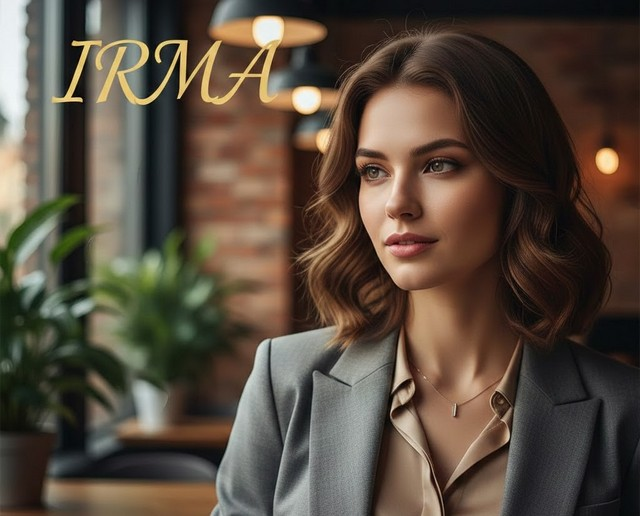

You know, I often think about how one short word—a name—can carry an entire history within it. And not just a history of origin, but something much deeper: like a code to a person’s character, a predetermined route that a person follows. This article grew out of that very thought. What spurred me to write it was my own curiosity: why does such a sharp, vibrant name like Irma appear in our surroundings so infrequently? What does it really mean? And, most importantly, what kind of women do we envision when it is spoken?
We’re not just going to list dry facts from online reference books. Good heavens, there are plenty of those retellings out there! We’ll dive headfirst into this name. We’ll try to feel its energy, break down its character piece by piece, and see how ancient roots sprout in modern women. As someone who has studied this very topic for many years, I can say one thing: most articles about names are superficial. As if they’re copying from one another. It won’t be like that here. Here, it will be a living mosaic of facts, observations, psychology, and even a touch of magic. Get ready to learn about Irma in ways that aren’t even written in Wikipedia.
Roots That Reach Back Centuries
Here’s where the detective story begins. You open one source—it says one thing. You open another—something completely different. And the truth, as always, lies somewhere in the middle. Let’s sort it out step by step, because this is the foundation of everything.
The main, most convincing version takes us to… no, not ancient Rome, but the harsh Germanic forests. Imagine the ancient Germans, their gods. Among them was one named Irmin. Something like a giant deity who embodied power, the entire universal force. Researchers believe that from his name came first the male name Irmin, and then the female—Irma. In other words, the original meaning is “she who belongs to Irmin,” “dedicated to the mighty one.”
What a powerful beginning! To name a girl after a god of strength. It’s not just for nothing. It’s already a statement about character.
But there are other paths. Latin, for example. They say it comes from the word “irmen”—“great,” “whole.” Hear that? Again, the same motif of strength, wholeness. The variation that it’s a shortening of Irmengard or Irmentrud also has a right to exist. And here’s what’s interesting: no matter which way you look, the same trait flows through. Grandeur. Might. Scale. Not tenderness, not a little flower. But something fundamental. I love this consistency. The name doesn’t deceive, doesn’t play games. It declares its essence right from the start.
Meaning Etched in Sounds
Okay, the roots are clear. But what does this mean for us today? Here’s a modern girl, a woman named Irma living her life. How does it work in practice?
The classic, “schoolbook” translation is “great,” “mighty.” Period. But a name isn’t a dictionary. It’s more like a set of qualities, an archetype.
Psychologists who study onomastics (the study of names) put it this way: Irma is about an inner core. Not about external aggressiveness (though that happens too), but precisely about that unshakable support inside that you can lean on in a storm. It’s about wholeness. She is usually not torn apart by doubts; she knows herself.
Also about the scale of thinking. “All-encompassing” can be interpreted as the ability to see the forest, not just individual trees. Not to get hung up on trifles. It’s the gift of a strategist.
And here’s what always gets me in popular articles. They write: “Irma is strong.” And that’s it. But how does this strength manifest? Is it in shouting louder than everyone else? Not necessarily. Often it’s a quiet, cool confidence that parts the crowd. It’s the ability to say “no” where others would hesitate. It’s strength of spirit, not just fists.
Character: Rock, Fire, or Ice?
Now let’s bring this portrait to life. What is she like, our Irma, in childhood, in communication, in everyday life? From my own observations, I can paint this picture.
Childhood. She is rarely that little angel child. More often, she’s an energetic, bustling, highly goal-oriented creature. In kindergarten or on the playground, she won’t sit passively in the sandbox. She’ll organize the game, assign roles. She can stubbornly stand her ground—not out of whim, but because a clear plan has already formed in her head, and she doesn’t understand why everyone isn’t following it. Parents can have a tough time because she demands not blind love, but respect for her personality. In adolescence, this independence can lead to an early move out of the house, a desire to earn her own money, to try herself in serious matters.
Adulthood. This is where the essence fully unfolds.
- A natural leader. This doesn’t mean she always wants to be the boss. But in a team, in a family, among friends, her opinion will inevitably carry weight. People trust her because they sense that very “rock” in her.
- Intelligence and practicality. Emotions are fine, but the issue must be resolved first. She’s an excellent analyst. In a stressful situation, when others are crying or panicking, Irma usually coolly assesses the situation and starts acting according to a plan. That’s worth a lot.
- Directness that cuts. Oh, this is both her main weapon and her main problem. She doesn’t know how and doesn’t like to twist, scheme, or weave intrigues. She’ll blurt out the truth right to your face. On one hand—honest and clear. On the other—it can terribly offend. She considers diplomacy a form of lying. She needs to learn, long and painfully, to smooth the edges.
- Self-sufficiency. This is the key word. She’s not afraid of loneliness. She can make decisions on her own, go on a trip, handle paperwork, fix a breakdown. She doesn’t look for someone to “lean on”; she looks for an equal partner for a joint journey.
And now about the shadow sides. Because you can’t go without them. Sometimes this powerful confidence turns into ordinary egoism. “I see it this way—so that’s how it is.” Pragmatism can turn into cynicism when everything has a cold, logical explanation. And the greatest danger is to lock herself in her own strength and stop seeing the pain of tender souls around her. She really needs to learn to be vulnerable. At least a little. It’s hard, but it makes her truly strong.
Profession: Where Does Her Strength Shine?
Wondering where she should go? Almost anywhere! Her natural gifts are a ready-made career constructor.
Where she’ll be like a fish in water:
- Business and management. She’s a born manager, director, entrepreneur. She knows how to see the goal, set priorities, and lead people. She’s not afraid of responsibility.
- Science, technology, IT. Her analytical mind will find itself in exact sciences, engineering, programming. Where logic, clarity, and endurance are needed.
- Law, law enforcement, politics. Honesty (sometimes too direct) and the ability to argue—an ideal set for a lawyer, prosecutor, judge, or public activist.
- Sports, especially extreme or individual. Her willpower can lead to an Olympic podium. Where you have to fight alone with yourself, she fully reveals herself.
- Traditionally “male” fields: architecture, surgery, aviation, military, rescue services. She doesn’t see gender stereotypes; she sees the task.
I would advise Irmas one thing: don’t be modest. Don’t hide your strength, thinking it’s “unfeminine.” Your “unfemininity” is your unique gift. Go where it’s hard, where decisions need to be made. There, you are the queen.
Love and Family: Fortress or Partnership?
Here’s where many rack their brains. How does this “iron lady” build personal relationships? Very simply—on the principles of equality and maximum honesty.
In love, she’s not prone to romantic nonsense with exaltation to the heavens. She doesn’t “fall” in love; she… enters it. Cautiously, with evaluation. She’s attracted not by words, but by actions. Not by compliments, but by reliability. She needs neither a king nor a servant, but an accomplice. A strong, interesting, independent personality who isn’t afraid of her character and who values freedom just as she does. Jealousy, controlling behavior—that’s death for such relationships. She’ll leave that love without a single regret.
Family, in her understanding, is not “my castle, my fortress” where she is the princess. It’s more like a joint startup. A partnership project that they build together, as equals. She’ll be a wonderful mother, but not the one who endlessly pampers. She’ll teach children independence, courage, responsibility. In her home, there’s usually order (often strict), fairness, and an atmosphere of mutual respect. The warmth there won’t come from rugs and pillows, but from a sense of security and reliability.
As for compatibility. Astrological advice is just background. The main thing is character. She’ll suit a manly but not aggressive Maxim or Mark. A wise and calm Bohdan can become a quiet harbor for her. But with dreamy and indecisive natures, it will be incredibly hard for her. She needs a response, not hesitation.
Talismans and Patrons
This is for those who love a bit of mysticism. What can “enhance” the energy of the name?
- Planets: Saturn (gives order, patience, structure) and Mars (gives energy, drive, will). A serious combination!
- Zodiac Signs: Ideally—Capricorn (under Saturn) and Aries (under Mars). Very good—Scorpio (the same depth and strength).
- Colors: Forget pink. Her colors are metallic gray, deep burgundy, dark blue, red like a “stop” signal.
- Stones: Agate (protects, balances), black onyx (strength of spirit), garnet (ignites inner fire).
- Animal symbol: She-wolf. Smart, independent, loyal to her pack (family), strong. A bullseye.
A Special Question
Here we need to say two important things that are often kept silent.
First, name days. How to celebrate if the name isn’t in the Orthodox saints’ calendar? This question worries many parents. The answer: during baptism, the priest will most likely suggest baptizing the child under the name Irina—the closest in sound and common in the calendar. Therefore, Irma will celebrate her angel day, name day, on the day of remembrance of Saint Irene. The exact date should be checked based on the birth date.
Second, modernity. Irma in Ukraine is not just a rare name. It’s expressive and bold. It’s not in the top charts, it’s beyond fashion, and therefore—beyond time. It’s for parents who aren’t afraid to raise not a “princess,” but a leader. For those who see in their daughter not a leaf trembling in the wind, but a sturdy branch. Right now, such a name is a wonderful choice. It’s international; it sounds the same in Ukrainian, Polish, German, English. It’s about strength. And strength is something our generation needs very much right now.
So, to sum up. The name Irma is not just a sound. It’s a code. A code to a character where strength dominates tenderness, reason over impulse, and honesty over compromise. It’s a guiding name, a name-task. If you name your daughter this—you believe in her power. If you are named Irma—you probably already know that you carry the legacy of an ancient giant god. And that’s cool.
Frequently Asked Questions (FAQ)
How common is the name Irma in Ukraine?
No, it’s quite rare. This makes it special and sets the bearer apart.
How to properly celebrate name days (angel day)?
Usually on the day of remembrance of Saint Irene, under whose name Irma is often baptized. The date should be clarified in the church calendar.
Is it true that Irmas are very stubborn?
Not stubborn. They are decisive. Stubbornness is standing your ground without reason. Irma’s decisiveness usually has clear logic and a plan.
What are the shortened versions of the name?
Irmochka, Irmusya, Ira (though this can be confused with Irina), Irka. But many bearers prefer the full, strong form—Irma.
Is it really a name of German origin?
The most likely version—yes, from the ancient Germanic deity Irmin. This gives the name a deep, “strong” meaning.
Author: S. Quill
See also:
Meaning of the Name Irina: Origin, Character, and Influence on Fate
Meaning of the Name Inna: Origin, Character, and How It Influences Life
The Meaning of the Name Inesa: Origin, Character, and How It Influences Life
Meaning of the name Indira: origin, character, and how it affects life